Aligner wear & care instructions
Congratulations on starting your aligner journey! Aligners are a fantastic way to straighten your teeth discreetly — but getting the best results comes down to how well you wear and care for them. Here's everything you need to know.
Wearing your aligners
Wear your aligners for 22 hours a day — this is non-negotiable. The more consistently you wear them, the more predictably your teeth will move
Only remove them for eating, drinking anything other than plain water, and brushing and flossing
Never eat or drink hot beverages with your aligners in — heat can warp the plastic and affect the fit
Always brush your teeth before reinserting your aligners after a meal — food and bacteria trapped under aligners can cause cavities and bad breath
Follow the wear schedule prescribed by your dentist
Inserting and removing your aligners
use an aligner removal tool if needed to avoid nail breakage or discomfort
alternatively, you may use your fingers too
Always remove from both sides evenly to avoid warping
Cleaning your aligners
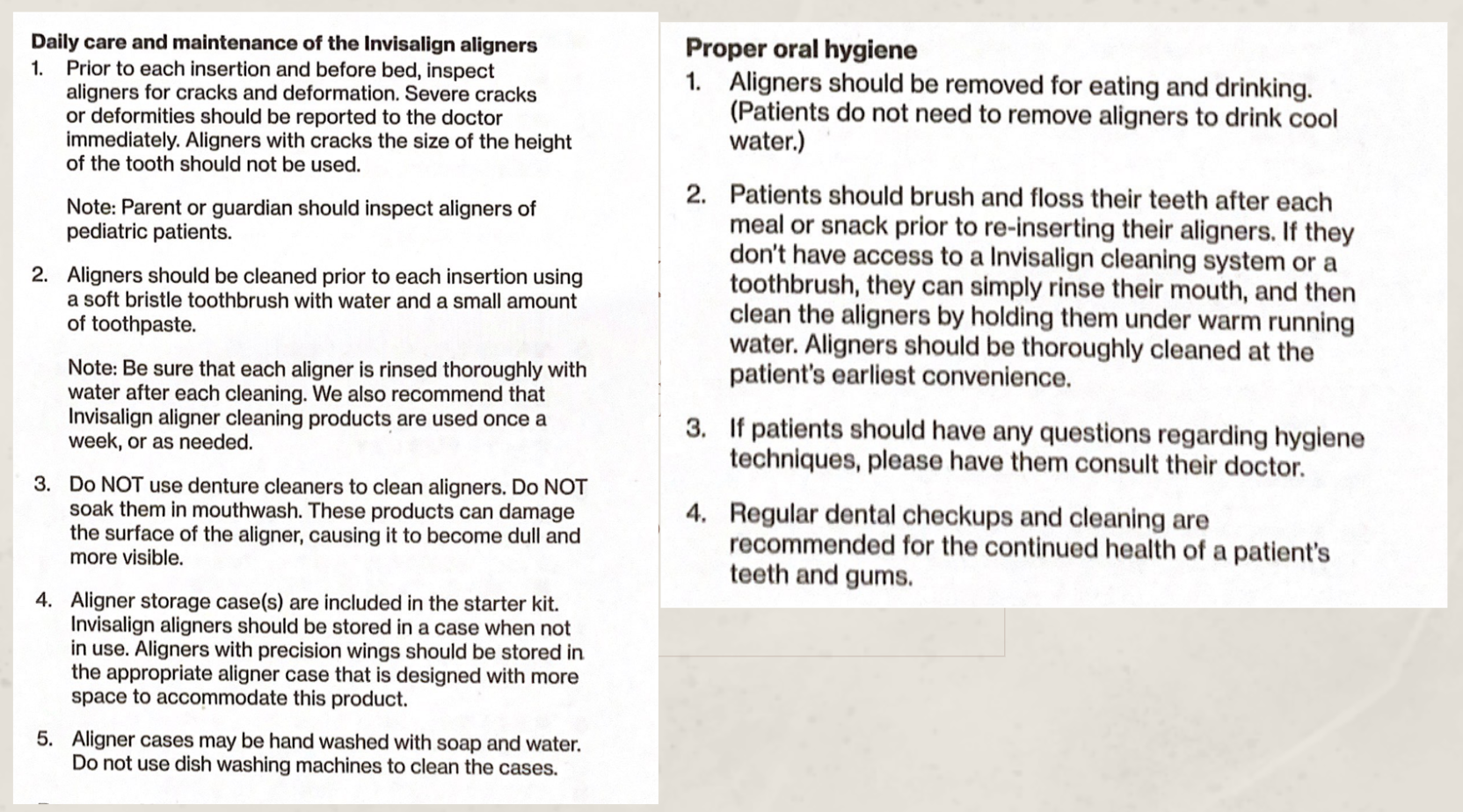
Rinse your aligners with cold water every time you remove them
Clean them at least once a day using a soft toothbrush and clear, unscented soap — toothpaste is too abrasive and will scratch the surface, making them cloudy
Use aligner cleaning tablets or crystals for a deeper clean — soak as directed on the packaging
Never soak in mouthwash — most mouthwashes contain colour pigments that will stain your aligners
Never use hot water — it will warp the plastic
Storing your aligners
Always store your aligners in their case when not in your mouth — never wrap them in tissue or leave them on a tray (they will get thrown away — it happens more than you'd think! 😄)
Air dry your aligner container / box to prevent mould build up
Keep a spare case in your bag, at work, and at school
Keep away from pets — dogs in particular love the smell of aligners!
What to expect
Soreness for 2–3 days when starting each new set is completely normal — your teeth are moving!
Excess saliva or a slight lisp in the first few days is normal and will resolve as your mouth adjusts
Aligners may feel tight at first — this is expected and means they are working
If an aligner feels completely unwearable or does not seat properly, contact your dentist
💡 Dr Watt's tip: Set a daily alarm to remind yourself to put your aligners back in after meals — it's surprisingly easy to leave them out for longer than you realise! Consistency is everything with aligner treatment. 😊
What should I bring for my dental appointment?
Always bring along your old trays and new unworn trays. If you have not been wearing your trays, we may have to backtrack and go back to an older tray. New unworn trays are required as modifications may be made to your trays :)
Other things to take note of:
If your aligners do not fit, do NOT force it in. Please get an appointment asap!
Do NOT drink carbonated or acidic drinks with your aligners. If you do, remove your aligners and wait for 30 minutes before brushing and flossing.
Do NOT drink hot coffee with aligners as it may cause tooth/aligner stains
Do NOT clean the aligner trays with boiling hot water.
What to do in an aligner emergency?
Running into a problem with your aligners? Don't panic — most issues are straightforward to manage at home. Here's what to do for the most common aligner emergencies.
Lost aligner
What to do:
Wear your previous set of aligners to prevent your teeth from shifting back — do not leave your teeth without any aligner
Move on to the next set of your aligners, but wear it for double the duration
Cracked or broken aligner
What to do:
If the aligner is still wearable and not causing injury, continue wearing it
If it has a sharp edge that is cutting your cheek or tongue, remove it and wear your previous set
If the tray cannot be worn anymore, move on to the next set of aligners (but wear it for double the duration)
Aligner doesn't fit properly
What to do:
Do not force it — forcing an ill-fitting aligner can cause unwanted tooth movement
Check that you have the correct aligner for the correct arch (upper vs lower) and the correct number in the sequence
If you have been wearing the previous set for less time than prescribed, go back and wear it for the full recommended duration before moving on
If the aligner still doesn't fit after wearing the previous set correctly, contact your dentist - you may need a rescan or refinement
Attachments have fallen off
Attachments are small tooth-coloured bumps bonded to your teeth to help the aligners grip and move teeth more precisely.
What to do:
Do not panic — losing an attachment occasionally is not an emergency
Continue wearing your aligners as normal
Inform your dentist at your next appointment and they will replace it
If multiple attachments fall off, contact your dentist sooner as this may affect your treatment progress
Aligner causing significant pain or cutting your mouth
What to do:
Remove the aligner and check for any rough or sharp edges
Use a clean nail file to very gently smooth any rough edges on the aligner trim line
If the pain is severe or there is significant injury to your gum or cheek, contact your dentist
Forgot to wear aligners for several days
What to do:
Do not immediately jump to your next set — your teeth may have shifted back slightly
Go back to the previous set for a few days first to re-align your teeth
Contact your dentist if you are unsure — they will advise you on the best course of action
Try not to let this happen again — consistency is everything with aligner treatment!
💡 Dr Watt's tip: Always keep your previous set of aligners — never throw them away until you have successfully moved on to the next set. They are your safety net in case of any emergency! 😊
how to remove your aligners
〰️
how to remove your aligners 〰️
WIth your hands or with aligner removal tools
how to use chewies
〰️
how to use chewies 〰️
Aligner chewies, also known as aligner tray seaters, are small, soft, cylindrical devices used with clear aligners to improve their fit. They help eliminate air gaps and bubbles between the aligners and teeth, ensuring a snug fit and proper pressure for effective tooth movement. Essentially, you bite down on them to help the aligners conform to your teeth.
