Root Canal Treatment — What It Is, and What to Expect Afterwards
"You need a root canal" — three words that make most patients immediately nervous. But the treatment itself is often much more straightforward than it sounds. Here's everything you need to know, in plain English.
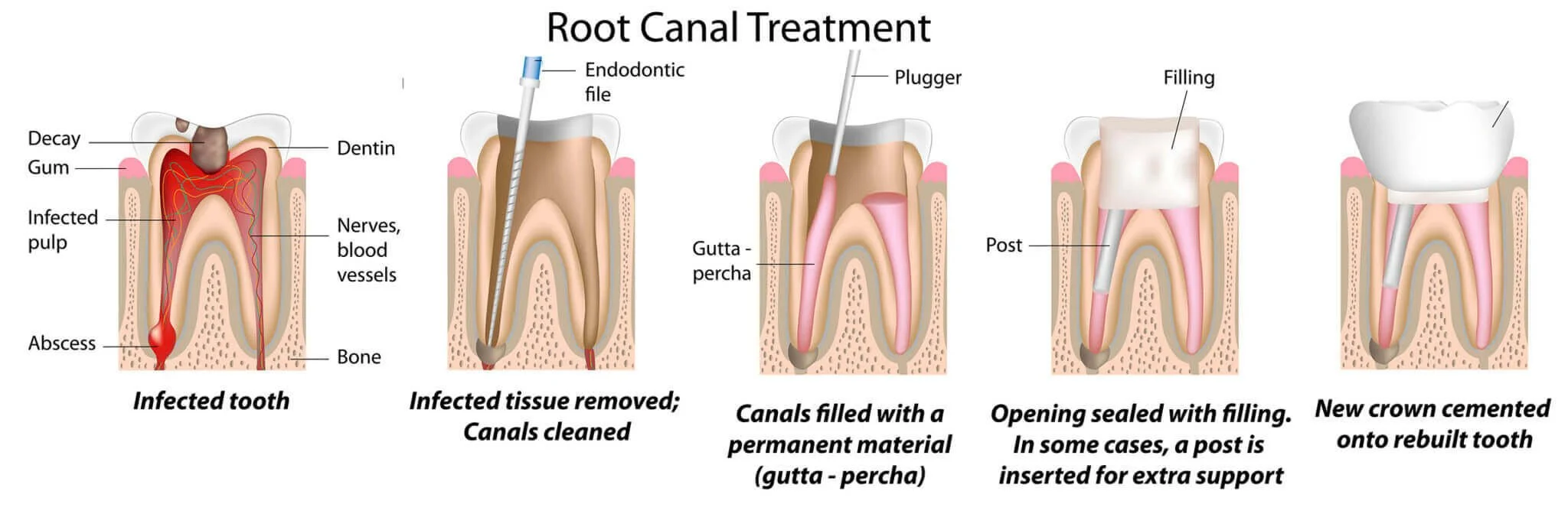
So... what exactly is a root canal?
Each of your teeth contains a soft tissue called the pulp, which runs through the centre of the tooth in channels called root canals. This pulp contains nerves and blood vessels — it's what kept your tooth alive as it was growing.
When the pulp becomes infected or inflamed (usually due to deep decay, a crack, or trauma), it can cause significant pain — and left untreated, the infection can spread. A root canal treatment removes this damaged pulp, cleans out the canals, and seals the tooth so you can keep it.
In short: a root canal saves your natural tooth. It's not the villain — it's the rescue mission. 🦷
Good to know
Root canal treatment has an undeserved reputation for being painful. With modern techniques and local anaesthesia, most patients are surprised by how comfortable the procedure actually is.
When is a root canal needed?
Your doctor may recommend root canal treatment if you have:
Persistent toothache or sensitivity to hot and cold
Swelling or tenderness in the gum near the tooth
Deep decay that has reached the pulp
A darkening of the tooth
An abscess (a pimple-like bump on the gum)
After your root canal — what to expect
The treatment is done, but your tooth still needs some TLC. Here's what's normal, and what to watch out for.
What's normal
Mild soreness or sensitivity for a few days — this is your body healing
Some tenderness when biting down on the treated tooth
Slight swelling around the area, especially in the first 24–48 hours
Numbness from the local anaesthesia for a few hours after the appointment
Tips for recovery
Take any prescribed medication as directed by your doctor
Avoid chewing on the treated side until your permanent restoration is placed
Stick to soft foods for the first day or two
Continue brushing and flossing normally — just be gentle around the area
Avoid very hot, cold, or hard foods while the area is still sensitive
When to contact your doctor
Severe or worsening pain that isn't relieved by pain medication
Swelling that gets worse after the first 48 hours
The temporary filling or crown feels loose or falls out
Fever, or any visible pus or discharge around the tooth
Important next step
A root canal-treated tooth needs to be crowned — this protects it from fracture over time. Please don't skip this step! An uncrowned root canal tooth is vulnerable and can crack, which may mean losing the tooth entirely. Follow up with your doctor to complete the treatment. 🙏 Read more about crowns here
The bottom line
A root canal is not something to fear — it's one of the most effective ways to relieve dental pain and save a tooth that would otherwise need to be removed. With a bit of care in the days following your appointment, most people recover smoothly and comfortably.
As always, if you're unsure about anything after your treatment, don't hesitate to reach out to your doctor. We'd much rather you check in than worry alone. 🩵
Have more questions about your dental treatment?
Browse our patient resources for tips, guides, and everything you need to feel confident in your dental journey.
