Children's brushing guide & decay prevention
Good oral habits formed in childhood last a lifetime — and as a parent, you play the most important role in setting your child up for a healthy smile. Here is everything you need to know about brushing correctly and preventing tooth decay in little ones.
When should I start brushing my child's teeth?
Start brushing as soon as the first tooth appears — usually around 6 months of age
Do not wait until all the teeth have come through — decay can affect even a single tooth
From the very beginning, brushing should be a daily routine — ideally after breakfast and before bed
The bedtime brush is the most important one — always brush before sleep and do not allow any food or milk after brushing at night
How much toothpaste should I use?
Getting the amount of toothpaste right is just as important as the brushing itself — too little and the fluoride protection is insufficient, too much and there is a risk of swallowing excess fluoride.
Children under 3 years — use a smear amount of toothpaste, no larger than a grain of rice. Just a thin smear across the bristles
Children 3 years and above — use a pea-sized amount of toothpaste — no more than this
Always use a toothpaste containing at least 1000ppm of fluoride — check the back of the tube before purchasing. Many children's toothpastes contain lower fluoride levels that are not sufficient to protect against decay — always check the label
After brushing, encourage your child to spit out the toothpaste but do not rinse with water — rinsing washes away the protective fluoride coating left on the teeth
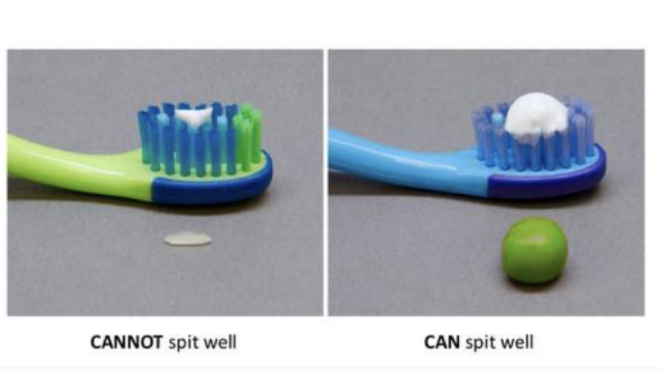
How much toothpaste to use for your child
How to brush your child's teeth
Use a soft-bristled toothbrush with a small head appropriate for your child's age — replace every 3 months or sooner if bristles are frayed
Brush for a minimum of 2 minutes — twice a day, every day
Use small, gentle circular motions — covering all surfaces of every tooth including the outer surfaces, inner surfaces, and chewing surfaces
Do not forget the gum line — angle the bristles gently towards the gums and clean along where the tooth meets the gum
Do not forget the back molars — these are the teeth most commonly missed and most commonly affected by decay
Making 2 minutes feel fun
Two minutes can feel like a very long time for a young child — here are some ways to make it easier and more enjoyable:
Play a favourite song that is approximately 2 minutes long — brush for the full duration of the song. There are also wonderful dedicated tooth brushing songs and timers available on YouTube and Spotify specifically for children
Use a sand timer or electric toothbrush with a built-in timer — many children's electric toothbrushes have a 2-minute timer with a fun signal
Let your child choose their own toothbrush and toothpaste — having ownership of their tools increases cooperation
Make it a family activity — brush your teeth at the same time as your child. Children learn by watching and imitation is powerful
Use a reward chart — a sticker for every successful brush adds up to a great motivator for young children
Praise generously — positive reinforcement goes a long way!
Supervised brushing — why it matters and until when
Children do not have the manual dexterity to brush their teeth effectively on their own until approximately 7–8 years of age — before this age, parents should brush their child's teeth for them or at minimum check and re-brush after the child has had a go
Even after children begin brushing independently, supervise and check their brushing until around 10 years of age to ensure all surfaces are being cleaned thoroughly
A helpful technique — let your child brush first to build independence and confidence, then re-brush the areas they have missed
Stand behind your child and tilt their head back slightly — this gives you a much better view and angle to brush effectively
Make it a positive, pressure-free experience — never make brushing feel like a punishment or a battle
How to prevent tooth decay in children
Diet and feeding habits play an enormous role in children's dental health — here is what to watch out for:
Do not allow milk or formula during sleep
Never put your child to bed with a bottle of milk, formula, or juice — when a child falls asleep feeding, the liquid pools around the teeth and the natural sugars in milk feed the bacteria that cause decay
This is one of the most common causes of severe early childhood tooth decay — sometimes called bottle decay or nursing caries — and can affect even very young children with just a few teeth
If your child needs comfort at bedtime, offer plain water instead after their teeth have been brushed
If you are breastfeeding, gently wipe your baby's gums and teeth with a clean damp cloth after night feeds
Choose fresh milk over flavoured or sweetened milk
Opt for plain fresh milk rather than flavoured milk, sweetened condensed milk, or milk drinks with added sugar — the added sugars in these products significantly increase the risk of decay
If your child prefers sweetened milk, gradually dilute it with increasing amounts of plain milk over time to transition them away from the sweetness — rather than switching abruptly
Be mindful of dried fruits
Dried fruits — such as raisins, dried mango, prunes, and dried apricots — are often perceived as a healthy snack, but they are very high in concentrated sugar and extremely sticky
Their sticky texture means they cling to the tooth surface for extended periods, giving bacteria a prolonged sugar supply to produce decay-causing acid
Limit dried fruits as snacks and always brush after consumption if possible
Fresh whole fruits are a far better alternative — the sugar is less concentrated and the water content helps rinse the teeth naturally
Reduce the frequency of sugary snacks and meals
It is not just the amount of sugar that causes decay — it is the frequency of sugar exposure that matters most
Every time your child consumes sugar — whether from food or drink — the bacteria in the mouth produce acid that attacks the tooth surface for approximately 20–30 minutes after each exposure
A child who snacks on sugary foods throughout the day is therefore exposing their teeth to repeated acid attacks, giving the enamel little time to recover between episodes
Aim to consolidate eating into defined mealtimes rather than allowing continuous grazing — three meals and a maximum of one to two planned snacks per day is ideal
Between meals and snacks, encourage plain water as the only drink
Watch out for vitamin gummies and supplements
Vitamin gummies and chewable supplements are often overlooked as a source of sugar — but many contain significant amounts of sugar and are sticky in texture
Children who take vitamin gummies daily are essentially having a sugary, sticky snack every day — often at bedtime, which is particularly harmful
If your child takes vitamin supplements, opt for sugar-free where possible
If vitamin gummies are the only option your child will accept, give them with a meal rather than as a standalone snack, and always brush afterwards
Never give vitamin gummies as a bedtime treat after brushing
Choose water and plain milk as everyday drinks
Plain water is always the best drink for dental health — it is sugar-free, helps rinse the mouth, and in Singapore tap water contains a small amount of fluoride
Plain fresh milk is also a good choice — it contains calcium which supports tooth development and the natural sugars in plain milk are far less harmful than added sugars
Avoid fruit juices, soft drinks, sports drinks, and flavoured milk as everyday drinks — even 100% fruit juice contains high levels of natural sugar and is acidic. Reserve these for occasional treats and always offer with a meal rather than in between
