Braces care guide
Your braces bonding appointment is one of the most exciting milestones of your orthodontic journey — it's the day your treatment officially begins! Here's exactly what to expect so you can come in feeling prepared and confident.
Before your appointment
Brush and floss your teeth thoroughly before coming in — your teeth need to be as clean as possible for the brackets to bond well
Have a good meal before your appointment — once your braces are on, you will need to stick to soft foods for the first few days
The appointment typically takes 30–60 minutes — come in relaxed and prepared to keep your mouth open for a little while!
What happens during the appointment
Cleaning and drying your teeth — your teeth will be cleaned and dried thoroughly to prepare the surface for bonding
Applying the bonding agent — a special adhesive is applied to each tooth surface. You may notice a slightly sour taste — this is normal and harmless
Placing the brackets — each bracket is carefully positioned on the correct tooth and pressed gently into place
Curing the adhesive — a blue curing light is used to harden the adhesive and bond the bracket securely to the tooth. The light is completely safe and painless
Threading the archwire — once all brackets are in place, the archwire is threaded through each bracket and secured with small elastic ties or clips
Final checks — your dentist will check the positioning of all brackets and the fit of the wire before you're done
What to expect afterwards
Soreness for 3–5 days is completely normal — your teeth are not used to the pressure of the wire yet. This will improve significantly after the first week
Cheek and lip irritation is common in the first 1–2 weeks as the soft tissues in your mouth adapt to the brackets — use orthodontic wax generously on any brackets causing discomfort
Your speech may feel slightly different for the first few days — this is temporary
Brackets may feel bulky and unfamiliar at first — your mouth will adapt faster than you think!
Eating after your bonding appointment
For the first few days after bonding:
Stick to soft foods — porridge, scrambled eggs, yoghurt, soft tofu, mashed potatoes, and soup
Cut all foods into small pieces before eating
Avoid biting directly into hard foods — cut them up instead
Avoid hard, sticky, and chewy foods throughout your entire treatment — these are the most common cause of broken brackets (especially ice & hard meat bones)
Foods to minimize throughout braces treatment (everything in moderation!)
Hard foods — nuts, hard candy, ice, bones
Sticky foods — gummies, caramel, chewing gum
Oral hygiene with braces
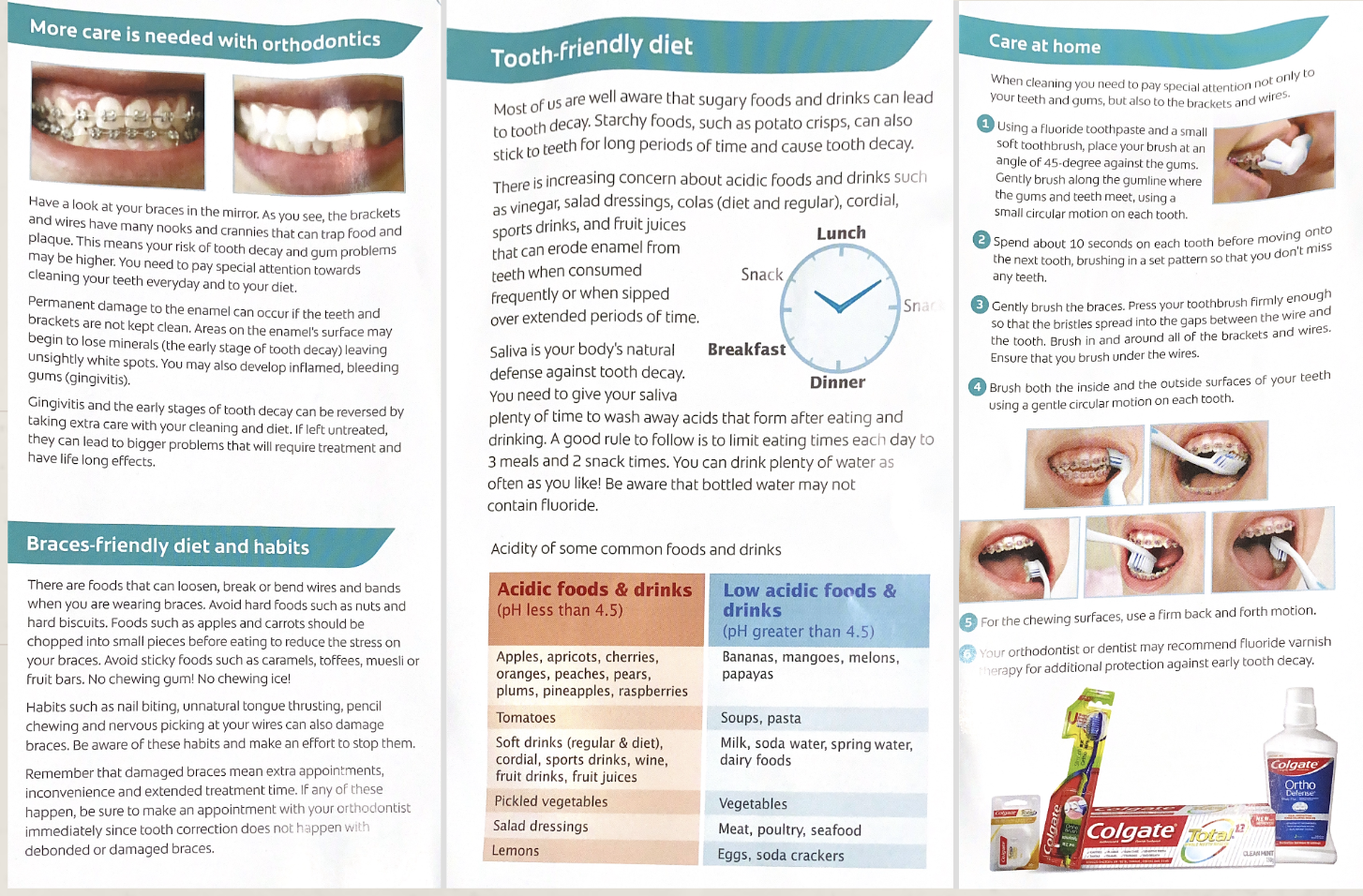
Good oral hygiene becomes even more important with braces — food and plaque can easily get trapped around brackets and wires.
Brush after every meal — do not let food sit around your brackets (or rinse your mouth if you cannot brush your teeth)
Use an orthodontic toothbrush with a V-shaped trim to clean around brackets effectively
Use interdental brushes to clean under the archwire
Use a floss threader or water flosser to floss between teeth
Use a fluoride toothpaste and consider a fluoride mouthwash if recommended by your dentist
💡 Dr Watt's tip: The first week with braces is genuinely the hardest — your mouth is adjusting to a lot of new sensations all at once. Stock up on soft foods, keep your orthodontic wax handy, and be patient with yourself. It gets so much easier after the first week, I promise!
Need product recommendations?
Brushing with braces
〰️
Brushing with braces 〰️
tuft brush
〰️
tuft brush 〰️
interdental brush
〰️
interdental brush 〰️
Flossing with braces
〰️
Flossing with braces 〰️
How to use platypus orthodontic floss
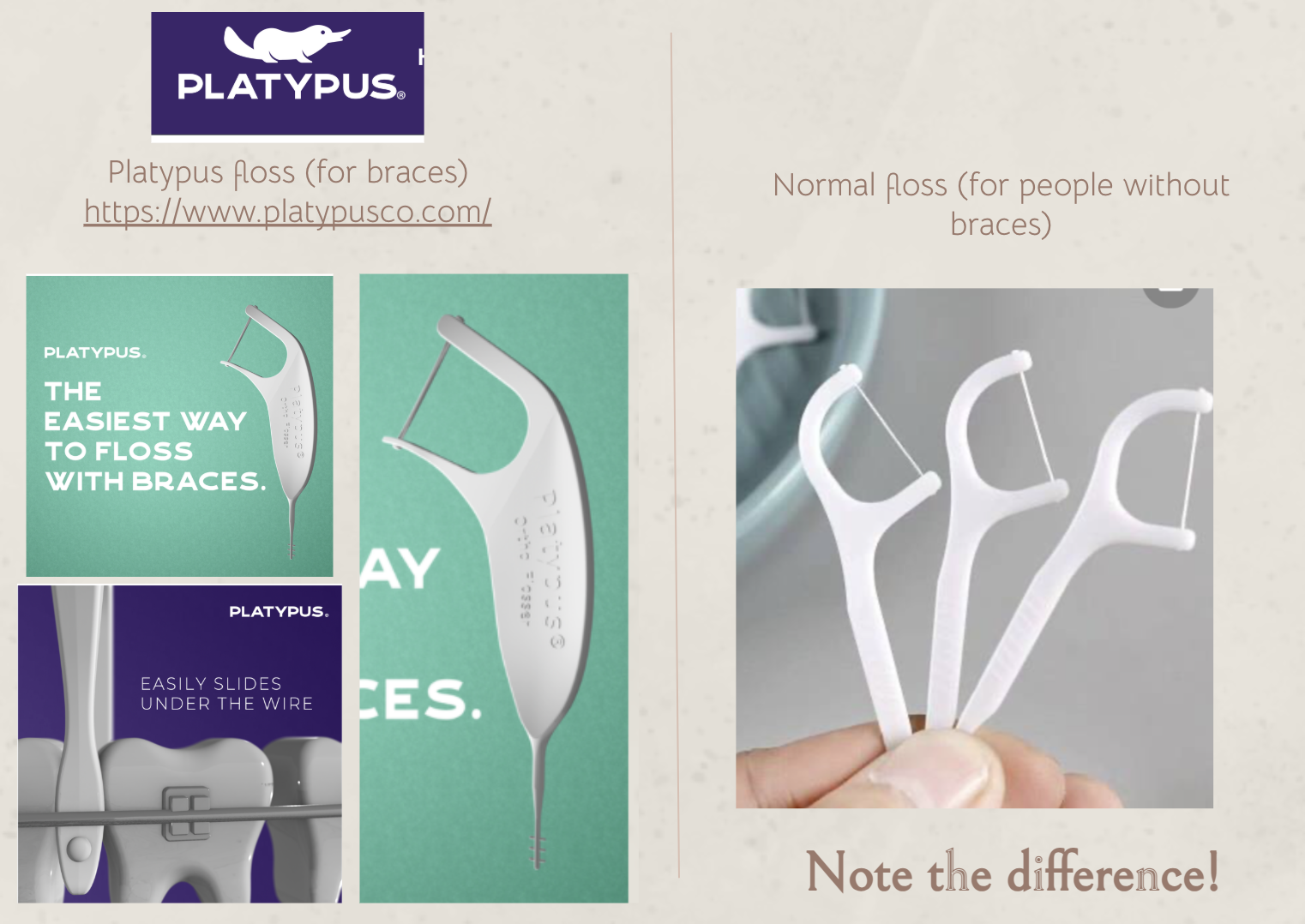
Do take note that the orthodontic floss pick is different from a regular floss pick. The orthodontic floss pick has a thinner & slimmer head that allows it to slide underneath the wire.
How to use a floss threader for braces
